Independent research confirms the impact and efficacy of the Mariposa Method.
The Center for Research and Reform in Education (CRRE) at Johns Hopkins University conducted an independent review and analysis of Mariposa Education’s outcomes across 12 educator and parent cohorts from 2021–2025.
Their findings affirm that the Mariposa Method produces measurable, lasting improvements in educator well-being, classroom climate, and children’s emotional resilience.
“While the Mariposa Method itself is a proprietary model, its core components are supported by extensive empirical literature … providing a robust evidence base for the principles embedded in Mariposa’s approach.”
- Johns Hopkins University, Center for Research and Reform in Education
Key Findings
Stronger Educator Confidence and Engagement
Educators consistently reported growing confidence and engagement throughout the program.
- 95% of participants rated the course “Helpful” or “Very Helpful.”
- Ratings of “Very Helpful” increased from 56% to 62% from mid-course to completion (Sherman June 2024 cohort).
- Participants described reduced stress, greater emotional attunement, and improved classroom management.
- Multiple cohorts achieved 100% “Helpful/Very Helpful” ratings by program end.
Enhanced Social-Emotional Teaching Skills
Participants overwhelmingly agreed that Mariposa strengthened their ability to support students’ SEL growth.
- Nearly all cohorts (94–100%) found the program relevant and directly applicable.
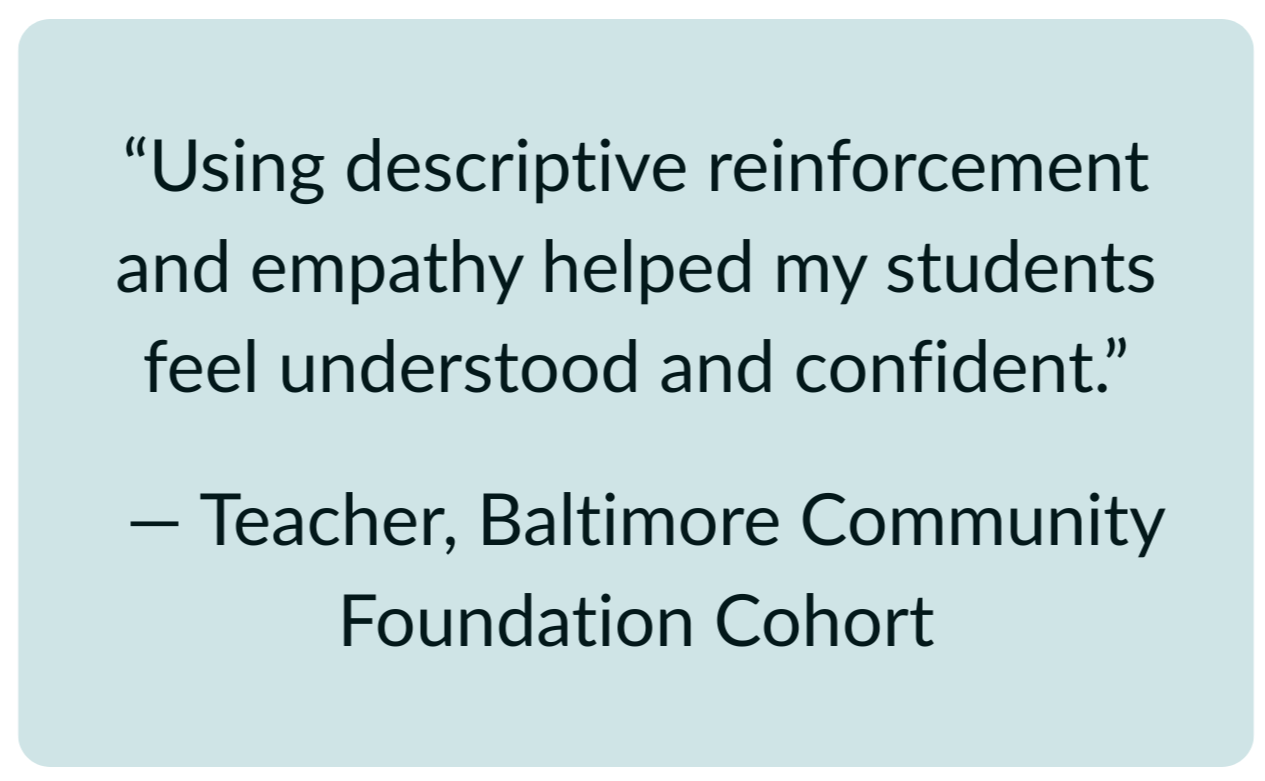
- Teachers and parents reported using co-regulation, emotional labeling, validation, and tone adjustment regularly.
- Educators noted deeper connections with students and more consistent emotional regulation.
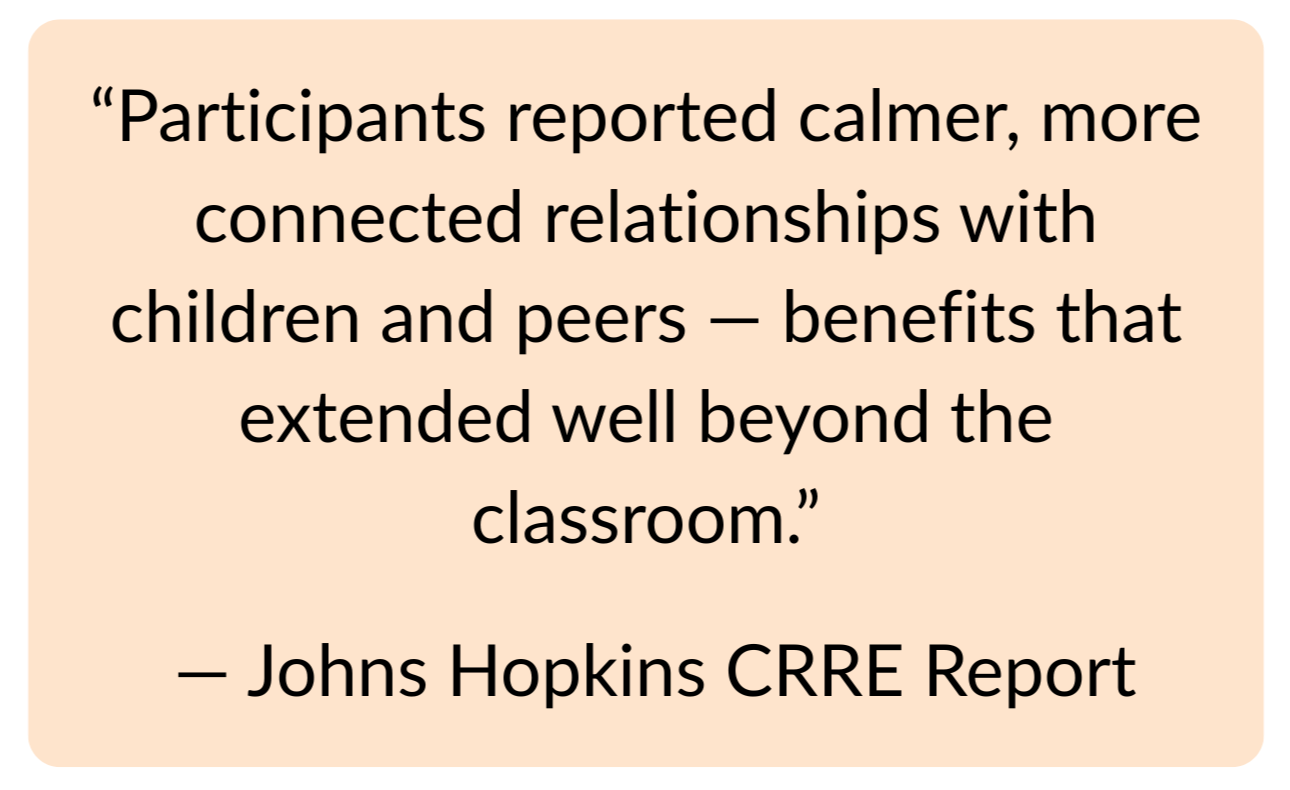
- Parents reported calmer interactions and stronger family relationships.
Reduced Stress + Improved Emotional Resilience
Pre- and post-assessments show measurable gains in stress management and emotional well-being.
- Participants moved from moderate baseline stress to markedly lower stress and greater mindfulness by course end.
- Common outcomes included enhanced personal resilience, renewed professional purpose, and higher satisfaction.
- Johns Hopkins noted consistent “spillover effects” — improvements that extended beyond classrooms into personal life.
Observable Change in Classrooms and Homes
Survey data show clear, positive behavior and climate shifts:
- More laughter, cooperation, and positive reinforcement
- Less yelling, aggression, and punitive discipline
- Higher student engagement, empathy, and rule-following
- Parents described improved patience, connection, and communication at home
Evidence-Based Design & Long-Term Impact
Johns Hopkins validated that Mariposa’s five core skills are deeply rooted in the science of social-emotional learning, attachment theory, and trauma-informed education.
Core Skills
Empathetic Reflection
Naming a child’s feelings and perspective so they feel seen and understood.
Authentic Expression
Clearly and calmly sharing your own feelings and needs without blame.
Shared Problem-Solving
Working together to identify needs and create solutions that meet them.
Descriptive Reinforcement
Noticing and naming specific behaviors to strengthen what’s working.
Constructive Discipline
Guiding behavior through connection, learning, and repair rather than punishment.
What participants are saying
“I wasn't always aware of how my emotions influenced my behavior before this training. Mariposa taught me how to listen empathetically, stop and identify my emotions, and react composedly. My ability to interact with people has significantly improved as a result of these abilities.”
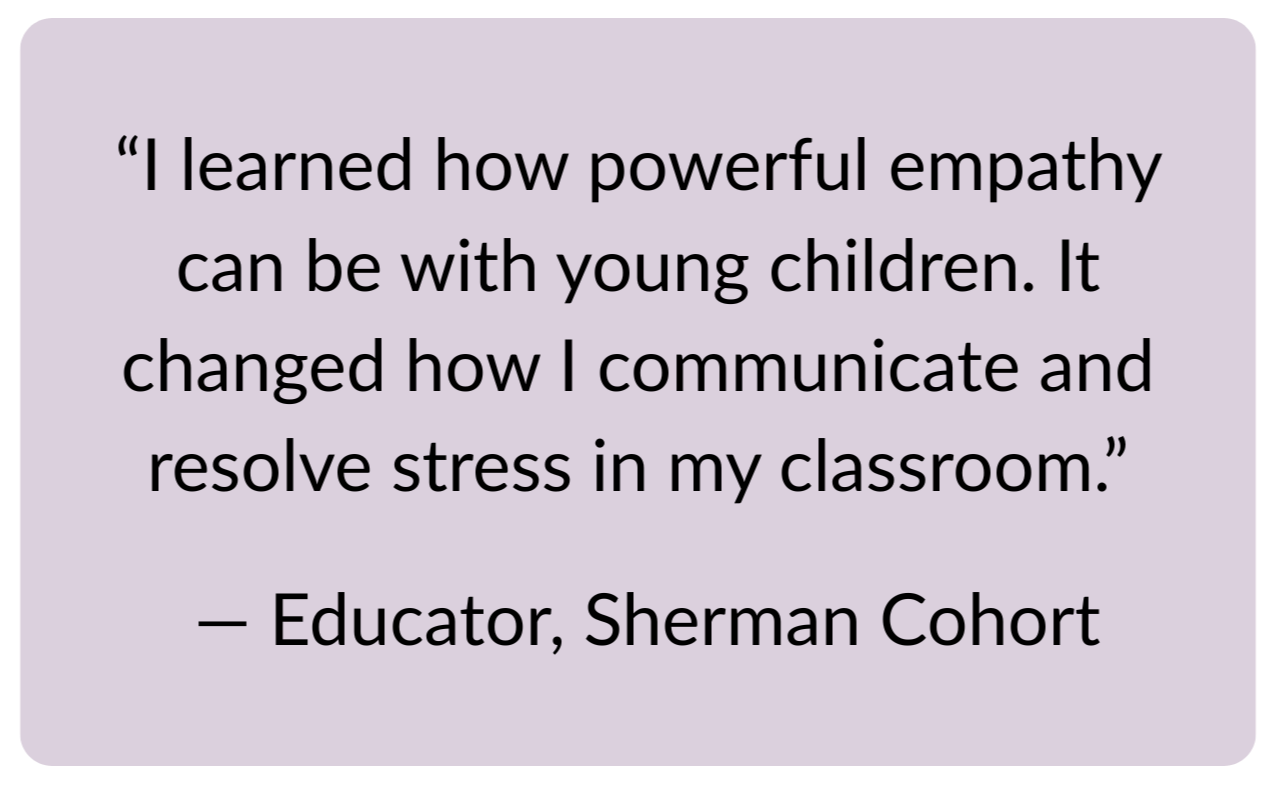
“Before taking this course, I did not understand how powerful of a tool empathy is to use with young children in a classroom setting. Learning how to use this has helped me communicate with my kids more effectively and helped resolve stressful situations when they pop up. Practicing empathy statements and my personal messages have helped me so much.”
“The modules/live sessions have provided me with more tools to work with and support students and my own child. I am excited to get back into the building to utilize the strategies and push our staff to do the same. I look forward to reaching students that we may not have been able to prior to the course.”
Measured Outcomes
Short-term effects
- Improved adult–child relationships
- Enhanced emotional regulation and co-regulation
- Reduced stress and burnout
Long-term effects
- Stronger teacher–student and caregiver–child relationships
- Better classroom management and school climate
- Greater social-emotional development and academic engagement
Why This Matters
Independent evaluation from one of the nation’s top research universities confirms that Mariposa Education creates lasting change in the adults and children it serves.
Your investment supports:
- A university-validated, evidence-based professional development model
- Demonstrated reductions in stress and burnout among educators
- Proven gains in classroom climate, emotional well-being, and student outcomes
- A scalable approach adaptable across schools, communities, and early-childhood settings
“Educators articulated a renewed sense of purpose and a transformation in mindset by the course’s conclusion.”
— Johns Hopkins University
Would you like to learn more about our impact data and case studies?
Reach out directly to us and let us know how we can help you.
Send Email