
SEL activities for teachers: It’s easier than you think!
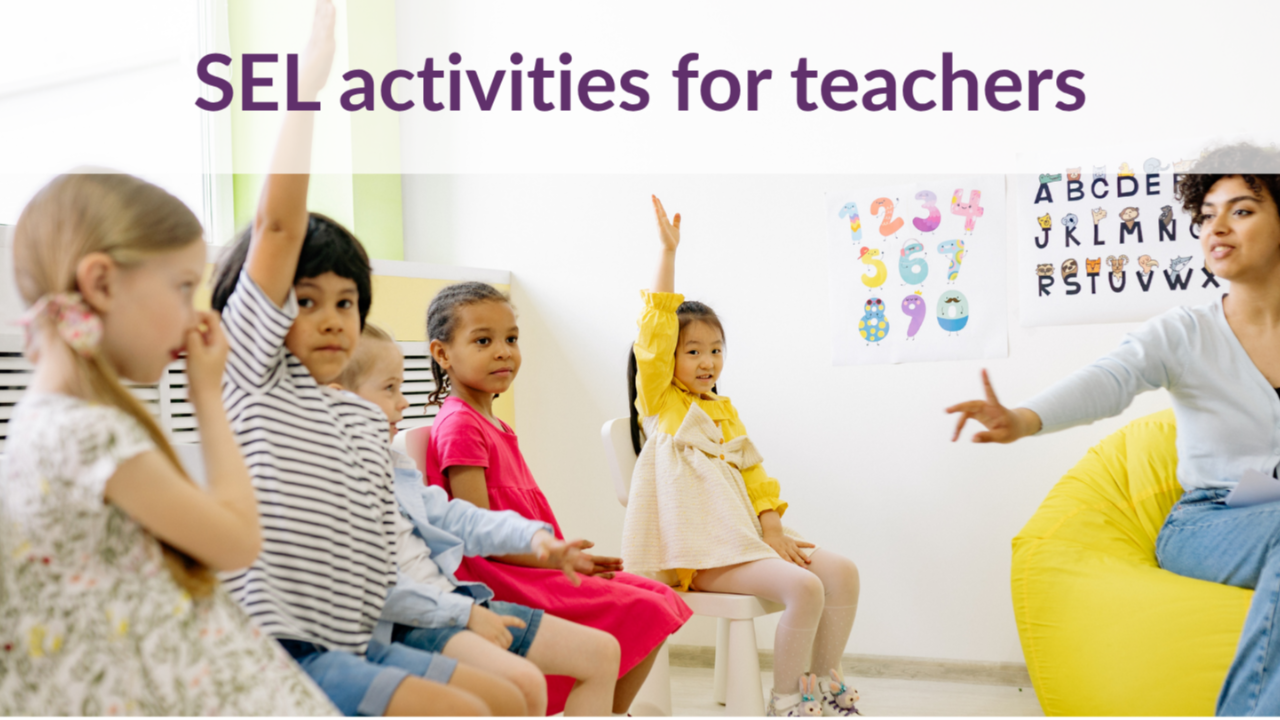
As teachers, you are tasked to plan activities to teach all of the skills children need, to make the day fun, to honor holidays, and make sure they bring something home for parents. Considering that we now know that social emotional learning, or SEL, is more predictive for school success than IQ or family background, teachers are now tasked to find SEL activities too. And here is the good news! You might already be doing them!
What are SEL activities for teachers?
So what are SEL activities for teachers? They are any activities in which children have opportunities to build social-emotional skills. In order to determine what activities build these skills, it helps to first understand what SEL is and how social-emotional skills develop.
What is SEL?
Social Emotional Learning, as defined by CASEL "the process through which all young people and adults acquire and apply the knowledge, skills, and attitudes to develop healthy identities, manage emotions and achieve personal and collective goals, feel and show empathy for others, establish and maintain supportive relationships, and make responsible and caring decisions."
We all know that children need these skills to learn, to participate in school activities, make friends, and be happy. As teachers, we know what it looks like when children do not have these skills…and when they do. What is often difficult is understanding HOW they develop.
HOW does SEL develop in a child?
We often notice the deficits in motivation or self-control, as they show up as either not reaching expectations or causing disruptions. Those are part of self-management and are the last social-emotional skills to develop.
What is the first social-emotional building block upon which all others rely? Self-awareness. This includes simply identifying one's own feelings and needs, strengths, and values. And then one can express them.
This is required to begin to understand the feelings and needs of others. And you can see how relationship skills, decision making, and even managing oneself all rely on the ability to be self-aware.
SEL activities to build self-awareness
Ok, so what SEL activities for teachers are there to build that all-important self-awareness? We can all think of activities like self-portraits, feeling charts, books, and more. And those are great, as they open the space to talk about ourselves and explore who we are.
However, whether you are working on self-portraits or simply sitting at the lunch table, the way children develop self-awareness rests on the relationship that the child has with emotionally skilled adults like you.
It turns out that children learn emotion regulation and build social-emotional skills through relationships with emotionally skilled adults. And there are predictable behaviors that those adults do that predict social-emotional competence in children.
There is a key adult behavior that specifically fosters self-awareness. This key behavior can turn almost any activity into an SEL activity. It involves expressing understanding and acceptance of a child's feelings, or empathy.
It takes practice and skill — expressing empathy may be different than what is commonly understood. While empathy as a feeling may drive us to care for and help others, expressing empathy has a unique and powerful impact on children.
How do you express empathy?
Expressing empathy involves listening or observing a child for what they might be feeling and then showing that understanding without judgment or any other agenda.
For example, as you are working on those self-portraits and a child says, "Ugh, this doesn't even look like me." Instead of saying, "I think it looks good!", empathy would sound like, "It's not turning out how you hoped it would."
Or if you are sitting at the lunch table, and someone says, "Maribel said she is not coming to my birthday party", instead of saying, "I am sure so many friends will come." or "Just ignore her. I wish I could come.", empathy might be, "That hurt your feelings and you are not sure why she would say that."
Why? Why is it so important to lean in and accept how a child is feeling and express that in words?
Why is expressing empathy important?
Because empathy is powerful. It helps a child feel understood and lowers the child's stress response. And in doing so, it often leads a child to begin to understand and express their own feelings more effectively. It also helps them to trust their own feelings and build self-awareness.
When an adult can put words to what a child is feeling, it changes how they process it in their brain. They cannot manage what they cannot identify.
For example, during a game that three children are playing, two children are joking around and teasing a child. This child says to the teacher, "I hate them, and this game is dumb." When the teacher empathizes, "That game was not fun for you, and their jokes didn't feel good to you", this validates his feelings but also helps him put words to what he could not. This is how self-awareness builds.
When children know that their feelings are valid, they are more able to build the skills to understand them, express them, and manage them so that they have the social-emotional skills they need.
So what are SEL activities for teachers?…any activity where you have the time and ability to listen and empathize with a child. To learn more about this powerful skill, check out our teacher courses both self-paced and blended

Recent Posts