
Calm Down Corner or Take a Break Space
Why your words matter in whether your cozy spaces are helpful
In an effort to address social emotional learning in schools, many new programs are being adopted. And this is good news, in that we are working to make space for the feelings of children, and recognizing that social emotional competence is a predictor of how children do in school, socially and academically. In other words, if they are stressed out, arguing, shutting down, or crying, they are not learning or having fun.
Not all of the interventions and programs are equally effective. One really common practice in classrooms is the calming corner, or the zen den, or calm down space or peace corner.
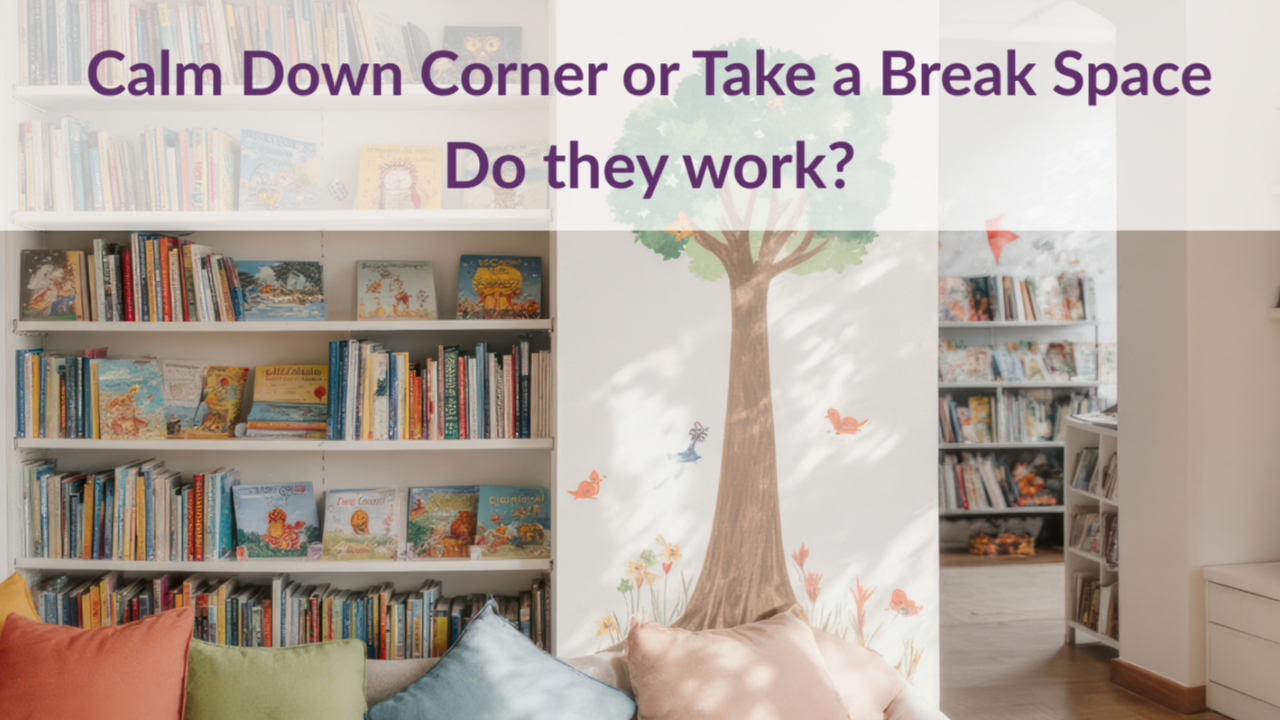
These spaces in classrooms are often inviting and lovely, with pillows, a soft seat, maybe some sensory toys, and books. And they are often a welcome addition to the classroom. As a child or an adult, they can be a great option for a child who is overwhelmed and needs this space.
However, I think the titles and language associated with the use of this space can either be helpful or harmful in the long run. I would argue that it should be renamed, as some classrooms do as a “Take a Break” space or a quiet space, rather than a calming corner.
The implication of calling something a calming corner or zen den is that the child’s main need is to calm down, that the child can and should calm down on their own, and that this space alone has the power to help them do that. Let’s break that down.
Why the term “Calm” can send the wrong message
We all know that the term, “Calm down” said to a child or an adult does not actually help a child regulate. In fact, it can have the reverse effect, making a person feel dismissed and become more stressed about whatever events and feelings led to this state of deregulation.
Consider this: Imagine a child has been feeling left out from two friends all morning. And now, in their hurt, they have begun to grab toys from them, leading to their friends fully rejecting them. Now they are screaming and not able to hear your words.
The message of being told to go to the calm down corner says that the main issue is that they are not calm. While there is truth to that, the issue is that they feel left out and they don’t know what to do. It also sends the message that their feelings are not ok, and you cannot handle the feelings in the classroom. This inadvertently sends the message to stuff their feelings and simply show calmness.
If you want to help them, and they are too upset to hear you or you don’t have time to help, saying, “Can you wait in the soft corner and then I will come help you figure it out in a moment”, sends a very different message. It simply offers a break for you and them so that you can help them.
Children don’t regulate emotions alone
Furthermore, the concept of a calm down corner is based on the idea that children can and should in fact calm on their own. Certainly, some do. However, children learn to regulate their emotions through their relationships with adults. An emotionally skilled adult who is able to sit with a child in their emotions can help the child to regulate. Children do not learn to regulate their emotions when left alone.
Therefore, the child who already has the skills and simply needs a break, may in fact find some relief in this cozy corner. But the child who is feeling hurt, overwhelmed, and /or frustrated may simply get more upset in this corner or may simply learn that their feelings are not valued and to ignore them.
Conversely, if the child is given this space to take a break AND offered the support of an adult who accepts their emotions and helps them to process them…then this child learns to co-regulate.
In other words, more often than not, the child is not ABLE to calm down on their own, because children learn to regulate their emotions through relationships as they experience challenges.
A space or a break is just that…not a solution
And finally, the idea that a space ALONE has the power to help a child calm down is misleading. Yes, sensory toys, soft spaces and quiet can help our sensory systems and have some calming effect. So can a deep breath or exercise.
However, when a child feels frustrated because they cannot do something, or hurt because they feel rejected…they ultimately need to feel understood and work through it. The breath, the break are often a step, but not the true road to feeling calmer and better.
Your words matter.
But when you consider the idea of “taking a break”, that feels really different. Imagine that you were yelled at by a parent at drop off. And you were upset, so upset that you were having a hard time focusing on your job. Would you prefer to be asked to go to a “calm down” space or offered a break? And ultimately, even with a break, you likely need to feel heard and understood as to why that experience was hurtful and upsetting.
So, yes, keep those cozy corners. And yes, the soft spaces, books, and sensory toys are helpful in busy classrooms, but change the language. Instead of the calm down corner, or the zen den, try… The Take a Break Space, the Cozy Corner, the Preschool Lounge…you name it.
But your words matter in how children perceive the space and the value of their feelings. And your approach to helping children regulate their emotions should be based on the knowledge that they need to feel understood in a quality adult child relationship.

Recent Posts